![[Jcount.com]](https://www.jcount.com/wp-content/uploads/2014/08/jcount150X50.png)
![[Jcount.com]](https://www.jcount.com/wp-content/uploads/2014/08/jcountstartupslogo1.png)

What does AbilTo do?
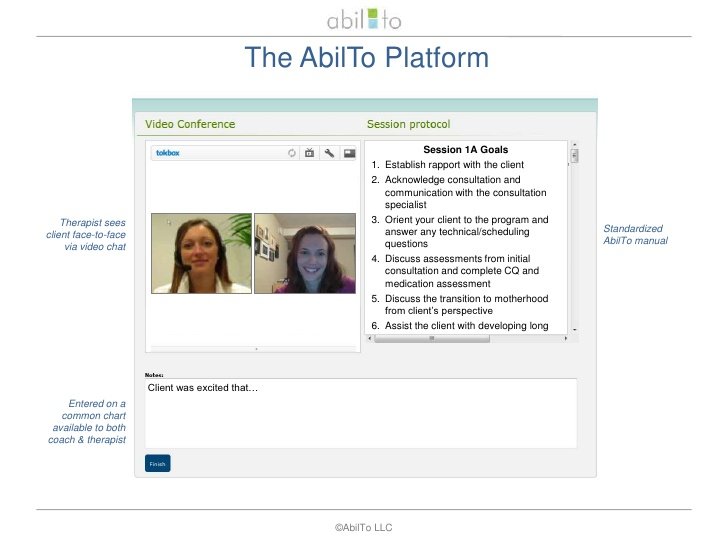
AbilTo, is an online video conferencing platform. It helps patients overcome the problems caused by behavioral health disorders and life transitions. The company started with the mission of providing a better option for millions who seek to overcome the difficulties resulting from commonplace behavioral disorders and life transitions. Its programs include solutions for those living with ADHD/ADD, anxiety/panic disorders and more.
Almost all around the world it is hard to find, buy and benefit from quality care: the result in needless, suffering and hardship. So AbilTo wanted to do better.
How much AbilTo was funded?
AbilTo raised $12M in Series C funding on June 9, 2015 from Sandbox Industries, BlueCross BlueShield Venture Partners, HLM Venture Partners and .406 Ventures
Previous funding
$3M in Series A funding on May 14, 2013 from .406 Ventures
$6M in Series B funding on March 18, 2014 from Sandbox Industries, BlueCross BlueShield Venture Partners and .406 Ventures
What is next for AbilTo?
The latest funding will help the company in accelerating the deployment of engagement, infrastructure capabilities and care delivery.
More about AbilTo
AbilTo was founded in 2008 by Michael Lackoff. It has its headquarters in New York, NY. It is the leading provider of behavioral change programs to improve medical health and reduce the cost of high cost medical populations.
The company is very client focused, it removes the common obstacles and makes therapy accessible to all by providing programs through web based videoconferencing.
The company bases all of its manualized programs on empirically validated approaches, coaching and cognitive behavioral therapy, which reliably produces real world results.
AbilTo is obsessed with quality. They train, supervise and integrate the work all their professionals, as well as strive for continuous quality improvements. It makes sure to meet with every prospective client in a starting consultation before accepting him or her in the program. If AbilTo’s program cannot help, then they refer the individual to better resources for them.