![[Jcount.com]](https://www.jcount.com/wp-content/uploads/2014/08/jcount150X50.png)
![[Jcount.com]](https://www.jcount.com/wp-content/uploads/2014/08/jcountstartupslogo1.png)

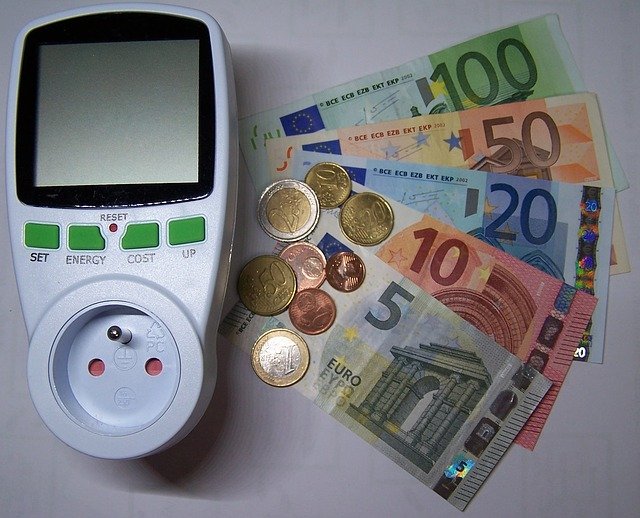
Last year, dire predictions were made about the threat posed by increasingly escalating cost of electricity to the financial health of Ontario small businesses. For many area entrepreneurs, high hydro bills were near or at the top of their regular operating expenses, costing even small, boutique companies thousands per month. With such high overhead, surviving and thriving in 2017 appeared to be a formidable challenge for many Ontario based small businesses.
Now that 2017 is nearing its final act, with leaves beginning to turn and fall, how much of those negative prognostications came true, and how many were merely conjecture? What if any electricity saving methods did companies employ to reduce energy costs?
With some businesses forced to relocate to other provinces or even the United States in order to decrease operational costs, escalating hydro bills have become a hot button political issue. Liberals have sought to provide immediate relief, while NDP and PC supporters caution future generations will pay a premium for this assistance.
At the onset of 2017, the government rescinded an 8% provincial tax on hydro bills for households and businesses consuming less than 50 kilowatts per billing cycle.
Still, this move did little to alleviate the concerns surrounding time of use pricing, as small companies are generally open during peak usage hours and are charged more accordingly. A move is afoot to convince the Minister of Energy to eliminate Smart Meter rates for small businesses, but to date that has not occurred.
Midyear, small businesses and residential consumers got a break in the form of a 17 percent reduction in hydro costs under Ontario Premier Kathleen Wynne’s plan. However, some critics argue this measure is only a temporary stopgap, and that future homeowners and entrepreneurs will shoulder the financial burden. Wynne acknowledged this reality but maintains her plan will help small business owners now, when the need to cut electricity costs is urgent.
Some businesses have opted to retrofit their operations to reduce their overall energy costs, and the government has stepped in to provide some assistance in that process. They recommend beginning with an energy audit, so business owners can accurately assess how energy is being used in their facilities, and offer funding intended to cover up to half the cost. Funding in the form of incentives is also available for businesses seeking to upgrade to more energy efficient equipment. Additionally, small businesses can request lighting assessments at no cost, and may receive up to $2,000 in incentives towards eligible energy efficient lighting upgrades.
Other companies have found some relief from high energy costs by switching energy suppliers or moving from electricity to natural gas.
Proactive small business owners have also turned to companies like Active Business Services to help them decrease their electricity costs. With a three pronged approach to energy management, Active Business Services has assisted them in reducing their energy costs by recommending and helping them to implement electricity savings measures.
While challenges remain for small business owners, overall they’ve noted a marked reduction in energy costs in 2017.


