![[Jcount.com]](https://www.jcount.com/wp-content/uploads/2014/08/jcount150X50.png)
![[Jcount.com]](https://www.jcount.com/wp-content/uploads/2014/08/jcountstartupslogo1.png)

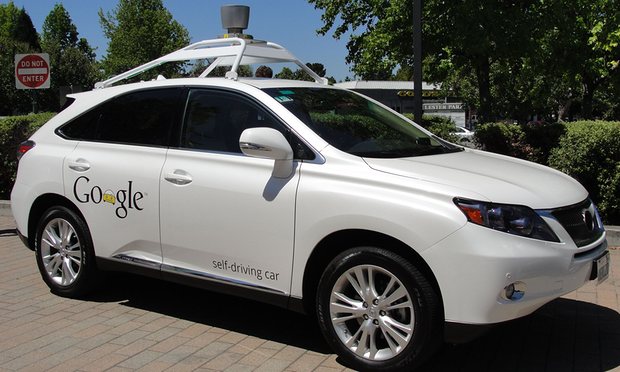
It was just a few years ago that thoughts of driverless vehicles ferrying passengers around cities were thought of as merely a work of science fiction. Now, self-driving cars are a reality and look to shape the future in the automotive industry as well as the information technology industry.
The two primary companies headlining driverless vehicles are Google and Uber, which used to be partners but are now rivals, particularly in this industry. In the past, Google invested $258 million in Uber, making it Google’s largest investment deal to date. Uber recently acquired Otto, which is a startup focused on self-driving technology in trucks that was founded by former members of Google’s self-driving team.
Uber
Approximately a year and a half ago, Uber hired a number of researchers from the renowned robotics department of Carnegie Mellon University, located in Pittsburgh, PA. This month, self-driving cars will make its public debut in Pittsburgh, as Uber will allow its riders to take these driverless vehicles in trips around the city. For now, these autonomous vehicles will come with engineers, in order for them to supervise the whole process and technology, while trying to perfect it. If need be, they can manually take control of the vehicle at certain situations. A second engineer will be seated in the front passenger seat with a laptop in hand, taking notes and recording important data.
During this run in Pittsburgh, riders will request Uber vehicles normally, via the app. Pairing a rider with a driverless vehicle will be done at random, and the good news for riders is that for now, trips with self-driving vehicles are free of charge.
As far as the vehicles themselves, Uber is partnering with automobile manufacturers such as Volvo and Ford in order to test their technology. They have said that they have no plans to build their own cars, unlike their rival Google.
Before automobile companies and other startups seriously considered the technology of self-driving vehicles, Google already started the project, which happened in 2009. To date, Google has claimed that over a million miles have been recorded by its autonomous vehicles, as they continue to test and refine the technology.
Google technology uses 3D laser mapping, GPS and radar in order to see, analyze, and interpret the surroundings while driving. Objects such as other vehicles, bikers, and even pedestrians are recognized, and the technology is made to safely drive around them, or be cautious in nature, particularly when a pedestrian is about to cross the street.
Google claims that its self-driving vehicles are much safer when compared to human drivers. Since the beginning of testing six years ago, Google has only reported 18 accidents (last noted February 2016), most of which were caused by human error, they claim.
Accidents
Google recently took their self-driving tests to the state of Arizona, where dust storms are more common. Their goal was to see how the technology would respond to these harsher road conditions. Uber has yet to record data since they have not been publicly testing until only this month.
The question many ask is: who will be liable should an accident involving a driverless vehicle occur? Even people such as car accident attorneys are waiting for the proper answers to these types of questions.
In Pennsylvania where Uber is testing, state regulators say that these self-driving vehicles will be treated like other vehicles in case of an accident, that is until any laws or policies regarding the specifics of driverless vehicles arrive. There are no clear rules as of the moment, since public officials are still studying on how to go about it.